

If you’re planning to visit the Paris Catacombs, book your tickets in advance. This isn’t one of those Paris attractions where you can decide to go on the day. Entry is limited, tickets regularly sell out, and choosing the right ticket can make a noticeable difference to your experience.
I’ve visited the Catacombs myself and have spent decades helping travellers plan trips to Paris. For some, it’s one of the most memorable experiences in the city. For others, it’s simply not the right fit. That’s why this guide isn’t just about where to buy tickets.
I’ll help you decide whether the Paris Catacombs are worth your time, explain the different ticket options, and share practical advice that most visitors don’t think about until they’re standing at the entrance. If you’ve decided the Catacombs belong on your Paris itinerary, this guide will help you book with confidence and avoid the common mistakes that can derail your visit.
This post may contain affiliate links, meaning I get a commission if you decide to purchase something through the links, at no additional cost to you. Read my Affiliate Disclosure.
What You Need to Know First
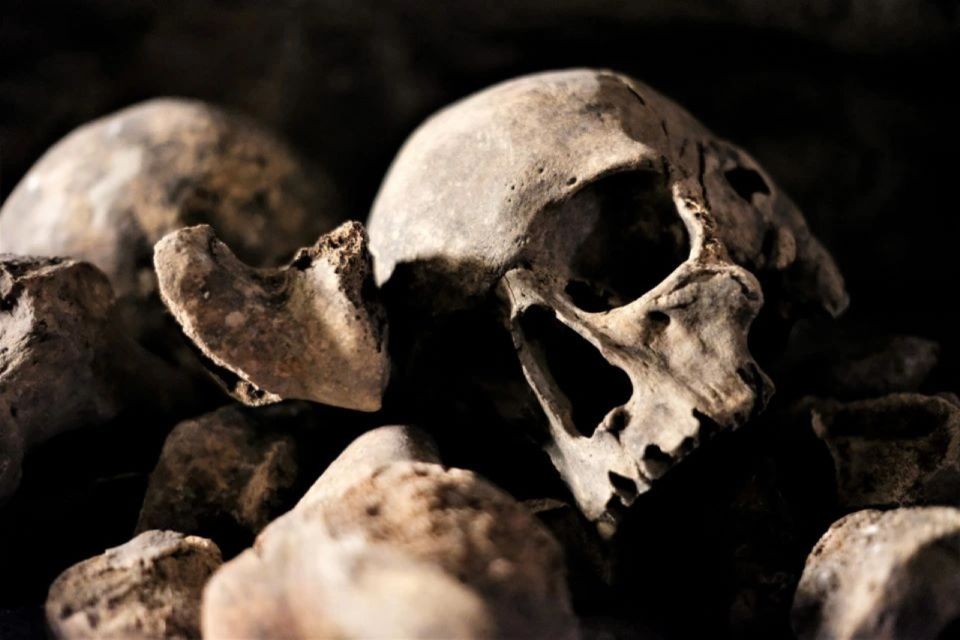
If you’re planning to visit the Paris Catacombs, don’t leave buying tickets until you arrive. Entry is limited, and tickets often sell out several days or weeks in advance, especially during spring, summer, and school holidays.
If the official website no longer has availability for your dates, I recommend checking GetYourGuide or Viator. Both are authorized ticket partners and often have additional inventory, guided tours, or combination experiences available.
If it’s your first visit to Paris, I’d consider booking a guided tour with restricted access or pairing your visit with a Seine River cruise. If you’re simply looking for the most affordable option, standard timed-entry tickets are perfectly suitable.
Which Paris Catacombs Ticket Should You Buy?

Not every Paris Catacombs ticket offers the same experience. Whether you’re travelling on a budget, visiting Paris for the first time, or looking for a deeper understanding of the site’s history, there’s an option that will suit you better than the others.
Here’s how I’d decide.
Standard Timed Entry Ticket
Best for: Budget-conscious travellers and independent explorers.
If all you want is access to the Catacombs, a standard timed-entry ticket is the most affordable option. You’ll follow the self-guided route at your own pace with the included audio guide, making it ideal if you prefer to explore independently.
This is the ticket I’d recommend if you’ve visited Paris before or simply want to experience the Catacombs without paying extra for a guide.
Reserve Standard Entry Tickets
Guided Tour with Restricted Access
Best for: History lovers and first-time visitors.
If this is your first visit to the Catacombs, this is the experience I’d choose.
Along with learning the fascinating history behind the tunnels and the relocation of nearly six million Parisians, many guided tours include access to areas that aren’t available with a standard admission ticket. These restricted sections provide a deeper look into the underground quarry and the history beneath modern Paris.
I found the stories brought the experience to life in a way that simply walking through the tunnels couldn’t. Rather than seeing rows of carefully arranged bones, you begin to understand why this extraordinary place exists in the first place.
If your budget allows, this is the ticket I think offers the best value.
Catacombs + Seine River Cruise
Best for: First-time visitors who want to make the most of their time.
If you’re only in Paris for a few days, combination tickets can be an excellent value. Pairing the Catacombs with a Seine River cruise gives you two completely different perspectives of the city, one beneath its streets and one along its most famous waterway.
I particularly like this option for first-time visitors because it combines one of Paris’s most unusual attractions with one of its most iconic experiences, while often saving money compared to booking each separately.
See Catacombs + Seine Cruise Options
My Recommendation
If I were planning a trip to Paris today, I’d choose the guided tour with restricted access.
The Catacombs are unlike a museum where you can simply admire what you see. Understanding the history of the old limestone quarries, the overcrowded cemeteries, and how six million sets of remains came to rest beneath Paris adds a level of appreciation that’s difficult to get from information panels alone.
If you’re travelling on a tighter budget, the standard ticket is still absolutely worthwhile. But if you’re deciding where to spend a little extra during your trip, this is one experience where I think a knowledgeable guide genuinely enhances the visit.
Are the Paris Catacombs Worth Visiting?

For the right traveller, absolutely.
The Paris Catacombs offer an entirely different perspective on the city. Beneath the streets of the 14th arrondissement lies a network of former limestone quarries that became the final resting place for the remains of around six million Parisians when the city’s cemeteries became dangerously overcrowded in the late 18th century. Today, only a small section of the 320 km (200 miles) of tunnels is open to visitors, making it one of the most unusual historical sites in Paris.
If you’re interested in history, architecture, or seeing a side of Paris that most visitors never experience, I think the Catacombs are well worth your time. They’re unlike any museum or monument in the city and offer a fascinating look at how Paris evolved, both above and below ground.
That said, I wouldn’t recommend them to everyone.
If you’re visiting Paris for the first time and only have two or three days, I’d probably spend that time experiencing the city’s iconic neighbourhoods, museums, cafés and gardens before heading underground. The Catacombs are memorable, but they’re not what I’d consider an essential first-time Paris experience.
Likewise, if you’re uncomfortable in confined spaces, have difficulty with stairs, or simply don’t enjoy darker historical sites, this is one attraction I recommend you skip. There are plenty of other ways to experience Paris’s history.
Personally, I found the Catacombs both fascinating and surprisingly thought-provoking. What stayed with me wasn’t the rows of carefully arranged bones, but the sheer scale of what lies beneath the city. Walking through the tunnels gives you a deeper appreciation for Paris’s long history in a way that’s difficult to experience anywhere else.
If you do decide to visit, I recommend pairing it with another place that explores Paris through the lives of those who came before us. A visit to the Père Lachaise Cemetery makes an excellent companion. While the Catacombs tell the story of ordinary Parisians whose remains were relocated underground, Père Lachaise introduces you to many of the writers, artists, musicians and political figures who shaped the city. Together, they offer a deeper understanding of Paris beyond its famous landmarks.
How Do the Paris Catacombs Compare?
I’ve visited several underground burial sites in Europe, and each offers a very different experience.
The Catacombs of Paris are the largest and feel the most expansive. Rather than a religious site, they tell the story of a growing city that had to solve a practical problem: overcrowded cemeteries. The experience is less about faith and more about the history and engineering of Paris itself.
The Capuchin Crypt in Rome is much smaller and more intimate. Created by Capuchin friars, it’s deeply religious, with chapels decorated using the bones of the order’s own monks. It feels reflective rather than overwhelming.
The Chapel of Bones in Évora, Portugal, is different again. It’s a single chapel where bones cover the walls from floor to ceiling. The visit is brief but striking, and the famous inscription above the entrance sets a very different tone.
If you’re choosing just one, I’d recommend the Paris Catacombs for travellers interested in history, urban planning and seeing a side of Paris that most visitors never experience. If you’re more interested in religious history or art, I think Rome offers a more meaningful experience.
My Experience Visiting the Paris Catacombs

Before visiting the Catacombs, I expected the rows of skulls and bones to be what stayed with me most.
They weren’t.
What surprised me was how quickly the atmosphere changed. The further underground I walked, the quieter everyone became. Even with other visitors around, there was an unspoken respect for the space. It didn’t feel like another tourist attraction. It felt like walking through a part of Paris that few people ever think about.
Learning the history gave the experience far more meaning.
The tunnels began as limestone quarries, where the stone used to build much of Paris was extracted. Those same honey-coloured buildings you admire throughout the city, from grand boulevards to historic churches, owe their existence to the rock beneath your feet.
More than a century later, when Paris’s cemeteries became dangerously overcrowded, the remains of around six million people were carefully transferred into these abandoned quarries. Rather than simply storing bones underground, they were arranged into the orderly walls visitors see today, creating one of the world’s largest ossuaries.
The Catacombs continued to play a role in Paris’s history long after that. During the Second World War, sections of the tunnels were used by members of the French Resistance, while today there’s an entirely different underground culture. Although access is illegal, small groups of urban explorers, known as cataphiles, are known to find hidden entrances and hold secret gatherings deep beneath the city.
That contrast is what stayed with me most. Above ground, Paris is celebrated for its cafés, museums and elegant streets. Below ground is an entirely different story, one that reveals how the city was built, how it adapted over centuries, and how it continues to capture people’s imagination today.
Planning Your Visit
| Need to Know | Details |
|---|---|
| Best Time to Visit | Book the earliest time slot you can, particularly between April and October. You’ll encounter fewer people, and the quieter atmosphere adds to the experience. |
| Opening Hours | Open Tuesday to Sunday from 9:45 am to 8:30 pm, with last entry at 7:30 pm. Closed Mondays. |
| How Long to Allow | Plan for 2 hours in total, including security, the self-guided route and time to explore afterwards. The underground portion typically takes about an hour. |
| Accessibility | There are 131 steps down and 112 steps back up with no lift. The tunnels are uneven in places, making the Catacombs unsuitable for wheelchairs or anyone with significant mobility limitations. |
| Photography | Photography is permitted, but flash is prohibited out of respect for the site and other visitors. The lighting is dim, so expect lower-light photos. |
| What to Wear | Wear comfortable walking shoes and bring a light layer. The temperature remains around 14°C (57°F) year-round, even during summer. |
| Getting There | The entrance is at 1 Avenue du Colonel Henri Rol-Tanguy in the 14th arrondissement. The easiest way to get there is by Metro via Denfert-Rochereau (Lines 4 & 6 and RER B), which exits almost directly outside the entrance. |
| Bags & Lockers | Large bags, suitcases and oversized backpacks are not permitted, and there are no lockers on site. Travel light and leave luggage at your hotel or a luggage storage facility before your visit. |
What to Do After Visiting
The Catacombs are located in a part of Paris that many visitors overlook, making it easy to continue your day without heading straight back to the city’s busiest sights.
- Stroll Rue Daguerre – One of my favourite nearby streets, lined with independent bakeries, cheese shops, cafés and produce markets. It’s an excellent place to stop for lunch or a coffee after your visit.
- Visit Montparnasse Cemetery – If the history of the Catacombs interested you, continue the theme with a walk through one of Paris’s most beautiful cemeteries, where you’ll find the graves of Simone de Beauvoir, Jean-Paul Sartre and Serge Gainsbourg.
- Head up the Montparnasse Tower – After spending an hour beneath Paris, it’s fun to see the city from above. The observation deck offers one of the best panoramic views in Paris, including the Eiffel Tower.
- Walk to the Luxembourg Gardens – About a 25-minute walk away, the gardens provide a complete contrast to the underground tunnels and are one of my favourite places to slow down with a coffee.
One Last Thought
The Paris Catacombs aren’t an attraction I’d recommend to every traveller, but if you’re interested in history, enjoy seeing a different side of a destination, or have already experienced Paris’s iconic sights, they’re one of the city’s most memorable experiences.
A little planning goes a long way. Booking the right ticket in advance means you’ll spend less time worrying about availability and more time appreciating one of the most fascinating places beneath Paris.
If you’re planning a trip to Paris and want help creating an itinerary that balances the must-sees with neighbourhoods, cafés and experiences that suit your travel style, I’d love to help. My custom trip planning service is designed to help you make the most of your time in the city, without feeling rushed.


