

Have you heard of New Town Prague or maybe Nové Město? Likely not.
During my week-long stay in Prague, I discovered this hidden gem often overlooked by other travellers. Despite its name, this historic district dates back to 1348 and offers an interesting blend of old and new.
As I wandered through its streets, I found myself drawn to the large Wenceslas Square, the heart of this area. It was packed with shops, cafes, and cultural landmarks like the National Museum. I was surprised by the spacious Charles Square, once the largest in Europe, and the quirky Dancing House that stands out among the traditional architecture.
I’ll share what to see and do in this area of Prague.
This post may contain affiliate links, meaning I get a commission if you decide to purchase something through the links, at no additional cost to you. Read my Affiliate Disclosure.
Old Town vs New Town Prague
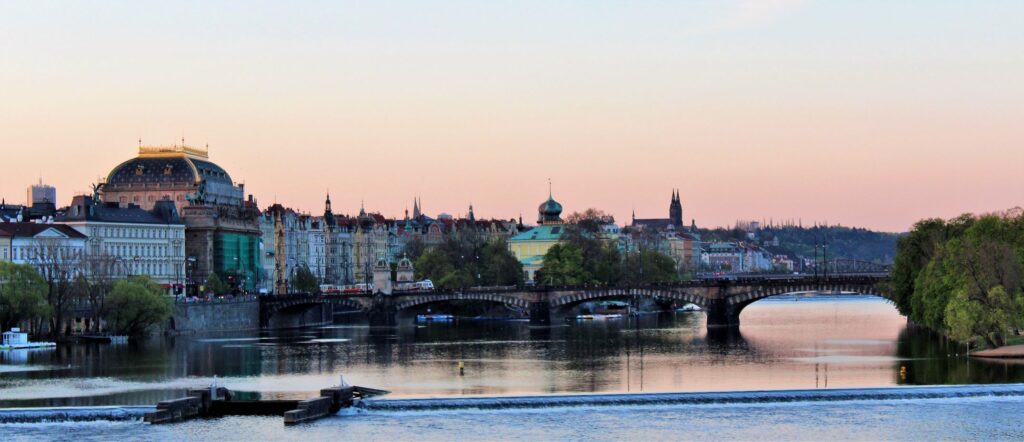
Having visited both areas of Prague – Old Town and New Town – it’s important to share how they are similar and how they differ.
Despite their names, both areas are steeped in history, with New Town dating back to 1348. The two districts blend seamlessly, and I often found myself wandering from one to the other without realizing it.
Both areas have stunning architecture and important landmarks. While Old Town or Staré Město, is home to the famous Old Town Square, New Town has its own impressive spaces like Wenceslas Square and Charles Square. I noticed that both quarters offer a mix of Gothic, Baroque, and Romanesque buildings.
However, the differences between Old Town and New Town became more noticeable as I explored further.
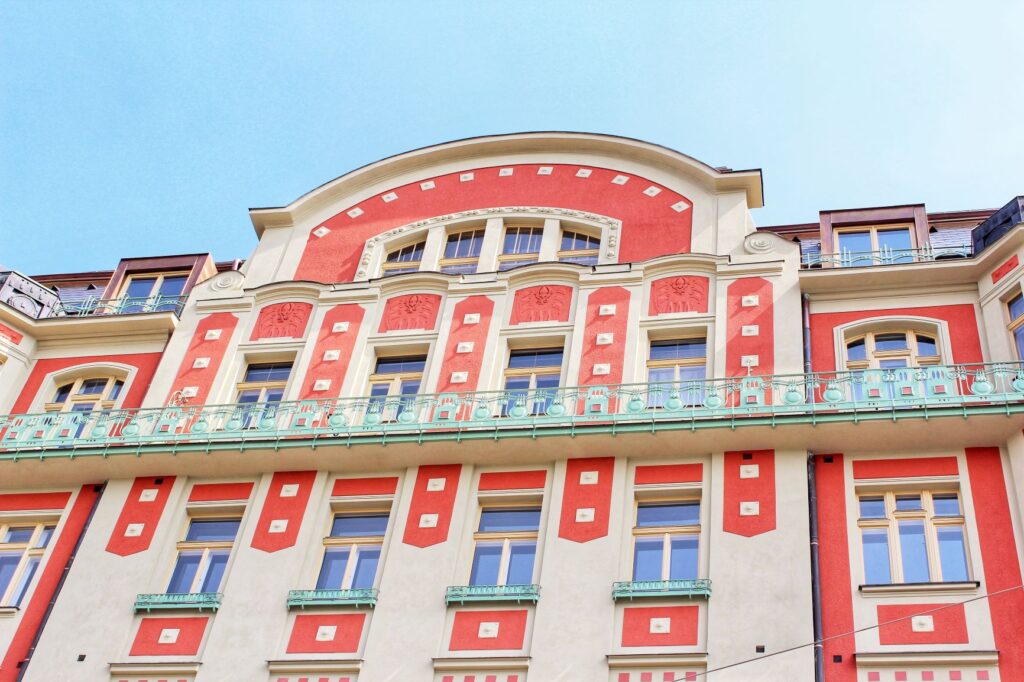
Old Town felt more compact and medieval, with narrow, winding streets and a higher concentration of tourists. Whereas, New Town has wider streets, more green spaces, and a more modern vibe.
New Town is twice as large as Old Town. It’s sprawled across one of the banks of the Vltava River and features, not just one but three large squares – Wenceslas, Charles and Republic Square.
I found New Town to be less crowded, with a higher proportion of locals going about their daily lives, especially with its high concentration of business offices nearby.
Another key difference I noticed was the atmosphere. Old Town seemed to focus more on preserving its historical UNESCO-listed charm, while New Town had a livelier, more contemporary feel. It’s where I found most of the city’s nightlife, shopping, and more international dining options. This is where the young people come to eat, sleep and hang out.
New Town is also the hub of public transportation (bus, tram and metro) – where Old Town is mainly foot traffic only.
Things to Do in New Town Prague
During my week in Prague, I discovered that New Town is packed with fascinating attractions. Here’s a rundown of the must-see spots I explored. I’ve even put them by geographical order, consider this your own self guided tour.
Wenceslas Square
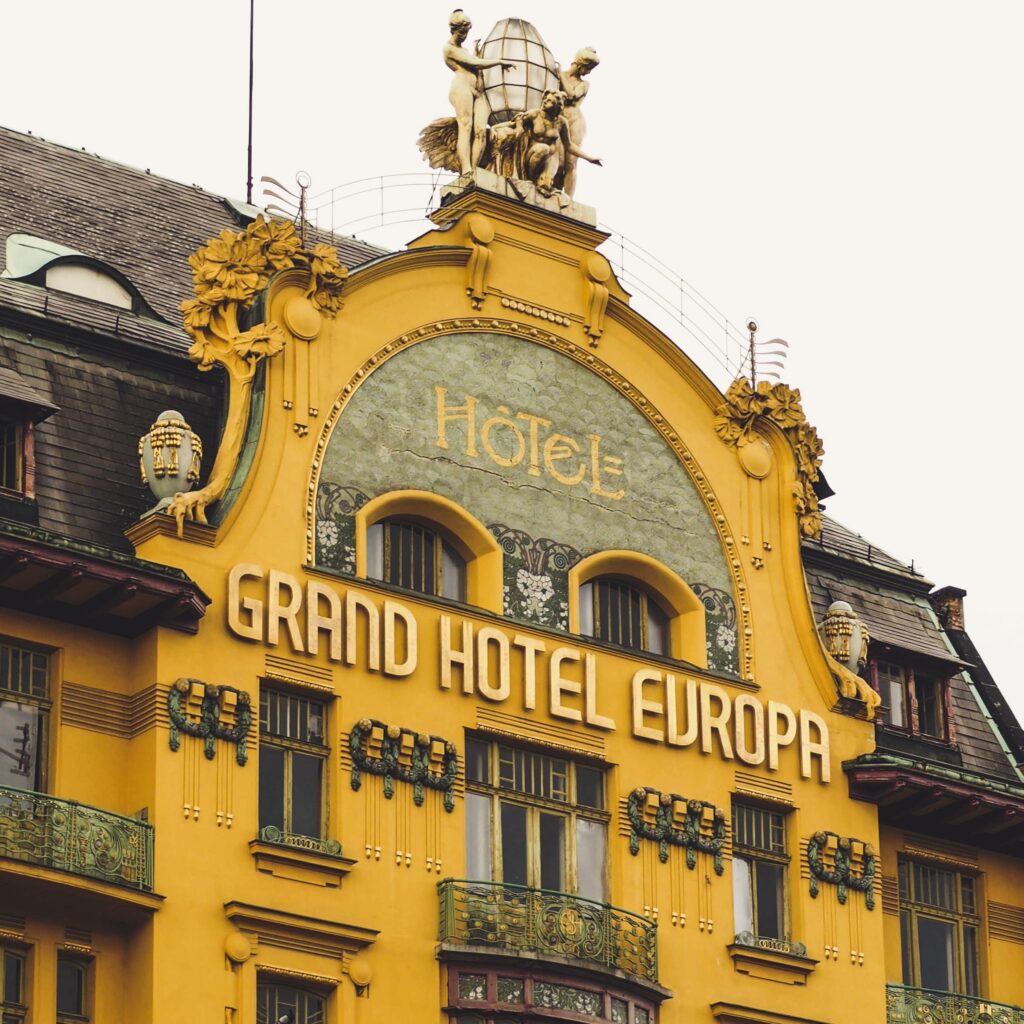
I found myself drawn to Wenceslas Square, the heart of New Town. This busy boulevard, originally a horse market in the 14th century, has witnessed numerous historical events. I was struck by its size – 700 meters long and 60 meters wide – and the mix of shops, cafes, and historical buildings, like the Grand Hotel Europa, lining it.
The statue of Saint Wenceslas at the top of the square is a popular meeting point.
National Museum
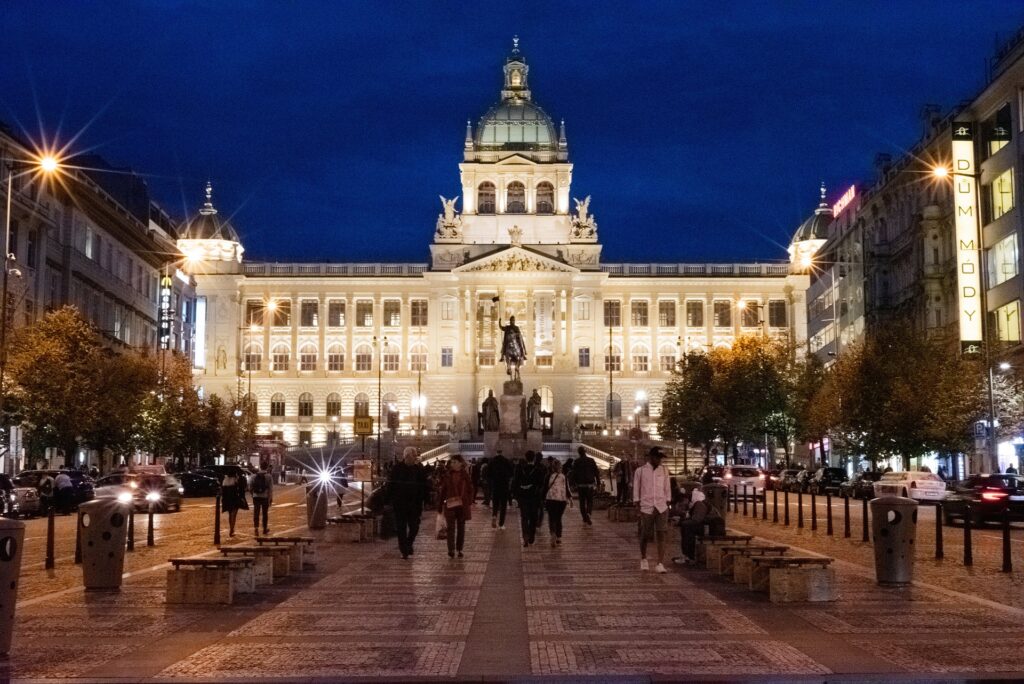
Dominating the top of Wenceslas Square, the National Museum‘s neo-renaissance building caught my eye immediately. Built in 1891, it houses an impressive collection of nearly 14 million items covering natural history, arts, and Czech culture.
The State Opera
I wanted to treat myself to an evening at the State Opera so I could see inside this gorgeous neo-renaissance building that opened in 1888 but with no luck in getting tickets.
Wilson Building Main Railway Station
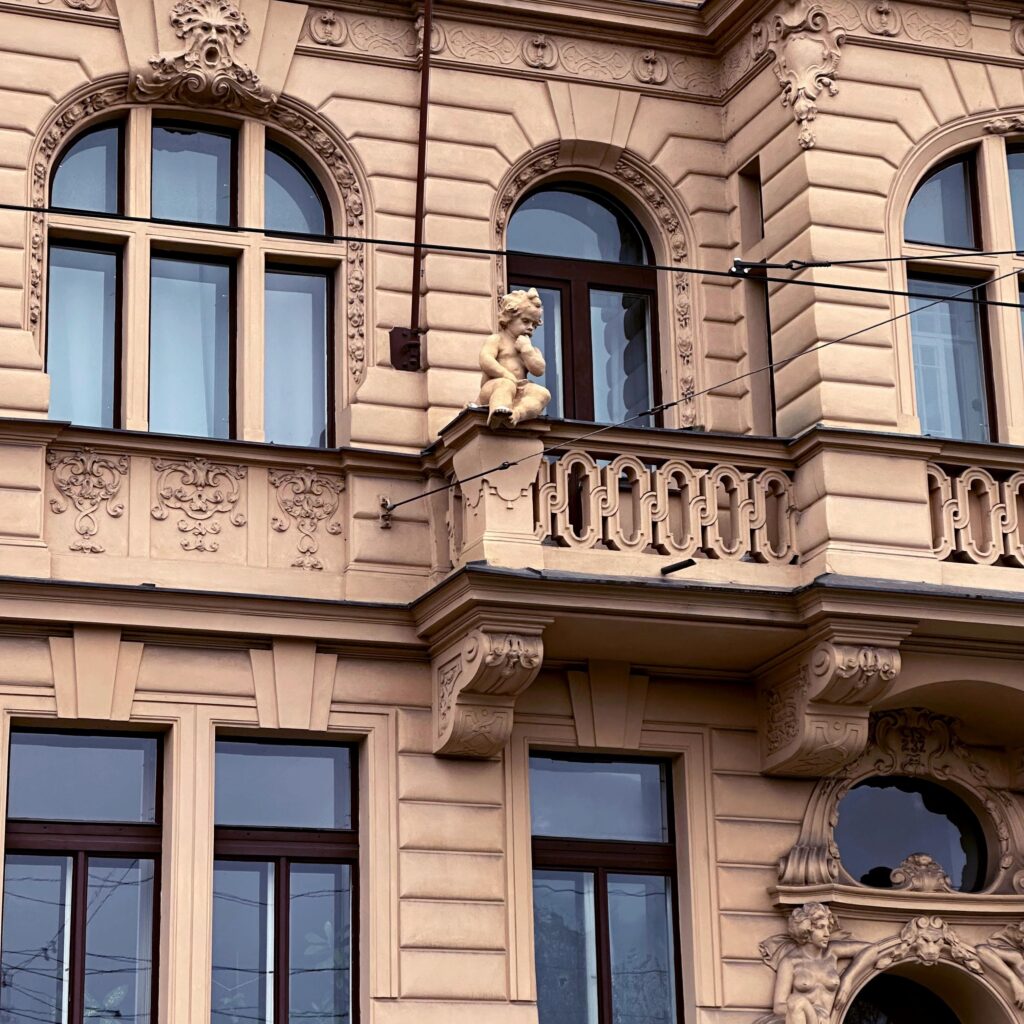

The Wilson Building Main Railway Station was more than just a transport hub. Its Art Nouveau facade and the original dome of the old station building made it a sight worth seeing in its own right.
Jerusalem Synagogue
The Jerusalem Synagogue is a true gem for those interested in Jewish history and culture. While I recommend visiting the Jewish Quarter district for a full immersion, this synagogue is worth visiting too for its blend of Art Nouveau and Moorish Revival architectural styles.
St Henry’s Tower
While exploring, I stumbled upon St Henry’s Tower. This Gothic bell tower, part of the Church of St Henry and St Kunhuta, allows you to climb to the top for a panoramic view of Prague’s skyline, including views of the nearby Wenceslas Square and the National Museum.
Mucha Museum
As an art lover, I couldn’t miss the Mucha Museum. Dedicated to the works of Alphonse Mucha, a key figure in the Art Nouveau movement, I’ve been known to travel far and wide just to see it, for example to Brussels, where it all started and to Turin the city known as the capital of the Liberty movement (which is Italy’s version of Art Nouveau).
Lucerna Passage and Palace
I found the Lucerna Passage and Palace to be a hidden gem. This Art Nouveau complex, with its cinema, cafes, and restaurants, was a delightful place to explore. The satirical take on the Wenceslas Monument hanging upside down from the ceiling is a surprise.
I stopped and enjoyed a glass of wine at the lovely Cafe Lucerna and music bar.
Franciscan Garden
I stumbled upon the Franciscan Garden, a serene spot for a break to sit amongst the lovely flowers, trees, and walking paths. Nearby is St Mary of the Snows church, the oldest church in New Town Prague and worth seeking out.
Charles Square and Hay Square

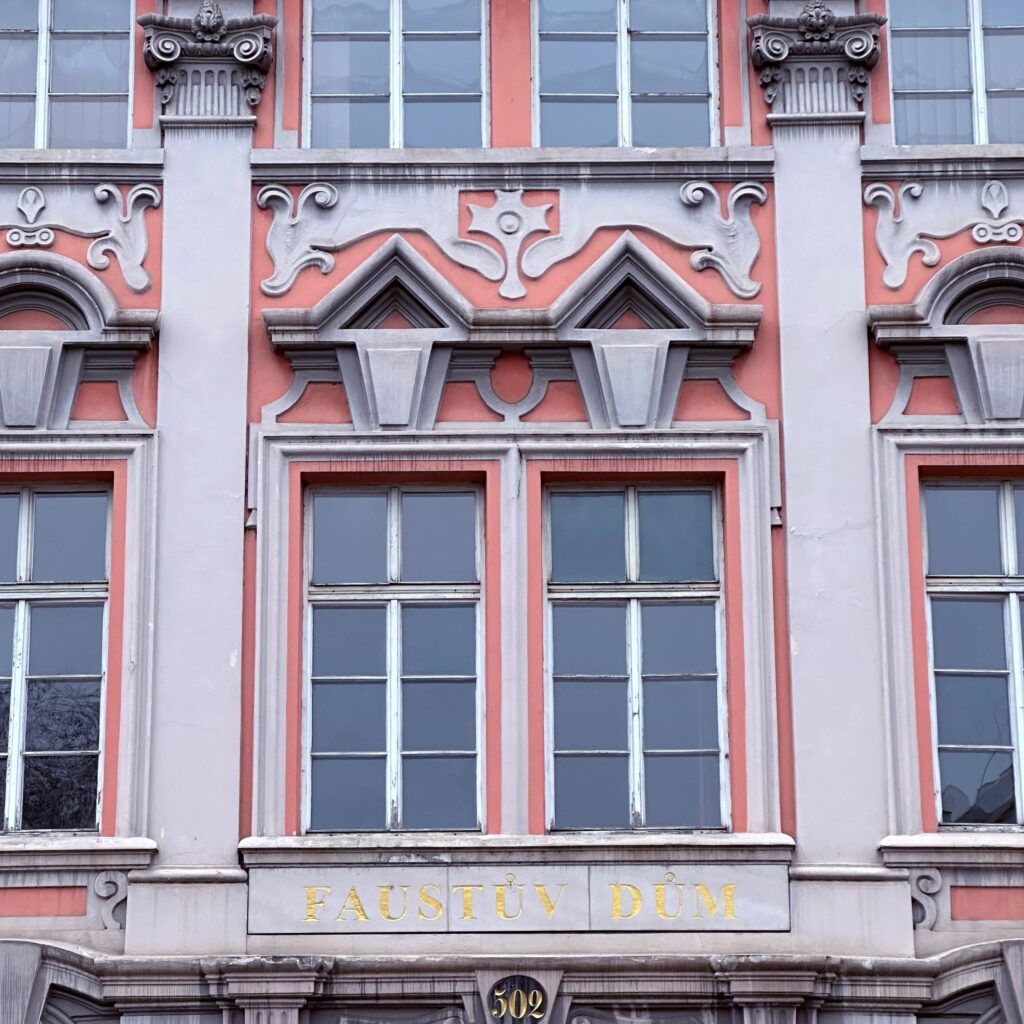
Charles Square, once the largest in Europe, surprised me with its spaciousness. I couldn’t help but notice a stately pink baroque mansion, only to find out that it is called the Faust House, which is linked to the 16th-century alchemist Dr. Faust.
Nearby, I found Hay Square, the smallest of the squares and least important, so much so it was never renamed during history.
All three squares were founded in 1348 – one used for horses (Wenceslas), one for cattle (Charles) and one for hay (Hay). All three are connected by today’s Vodičkova and Jindřišská streets and each has its own metro station.
New Town Hall
My visit to the New Town Hall has an interesting history. Built in the 14th century, it has witnessed everything from defenestrations (which literally means to throw out of a window) to executions. The reason to visit here is its tower. Climb to the top and you will have views of Old Town Prague and Prague Castle.
The Dancing House

I couldn’t wait to see the famous building! The Canadian-born architect Frank Gehry designed this office building and nicknamed it ‘Fred and Ginger’ as he thought the two glass towers resembled two dancers.
Visit the ground floor cafe or the rooftop bar to enjoy the views of the Vltava River.
The National Theatre
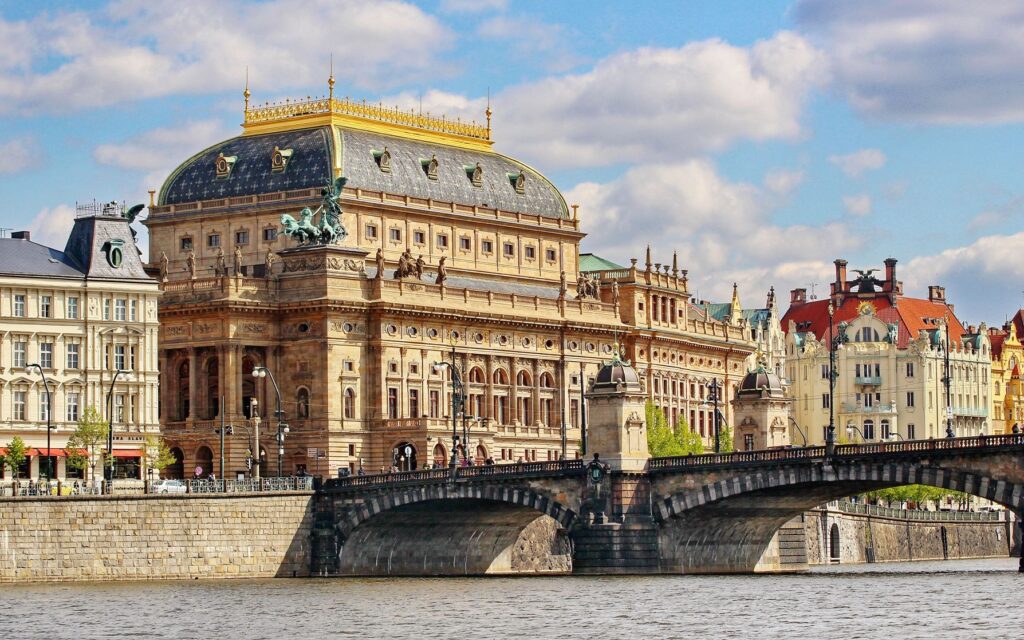
The best view of this beautiful building is from the Charles Bridge. I fell in love with the architecture which has a mix of Austrian and Italian influences. Since 1881 it has offered ballet, opera and theatre productions.
My biggest regret was not getting tickets in advance to be able to see the inside.
Afterwards, I went to the nearby Cafe Louvre for tea and cake. The cafe used to be a place visited by Albert Einstein and Franz Kafka.
Final Thoughts
I will leave you with one of my favourite things to do in New Town, that is Naplavka, this is the long stretch of embankment along the Vltava River.
I loved coming here for an evening stroll, with views across the river to Prague Castle in the Castle, or Hradčany district. Find a nearby restaurant and watch the sun go down, its far less busier than Charles Bridge. How I came upon it was by visiting it on a Saturday where they host a large Farmers Market.
It’s no surprise that New Town Prague offers so much to see and do as one of the larger districts in the city. Unfortunately, it gets overshadowed by other landmarks in Prague. But if you love culture and art nouveau architecture be sure to add this neighbourhood to your Prague itinerary. For more trip planning for Prague, visit here.


